
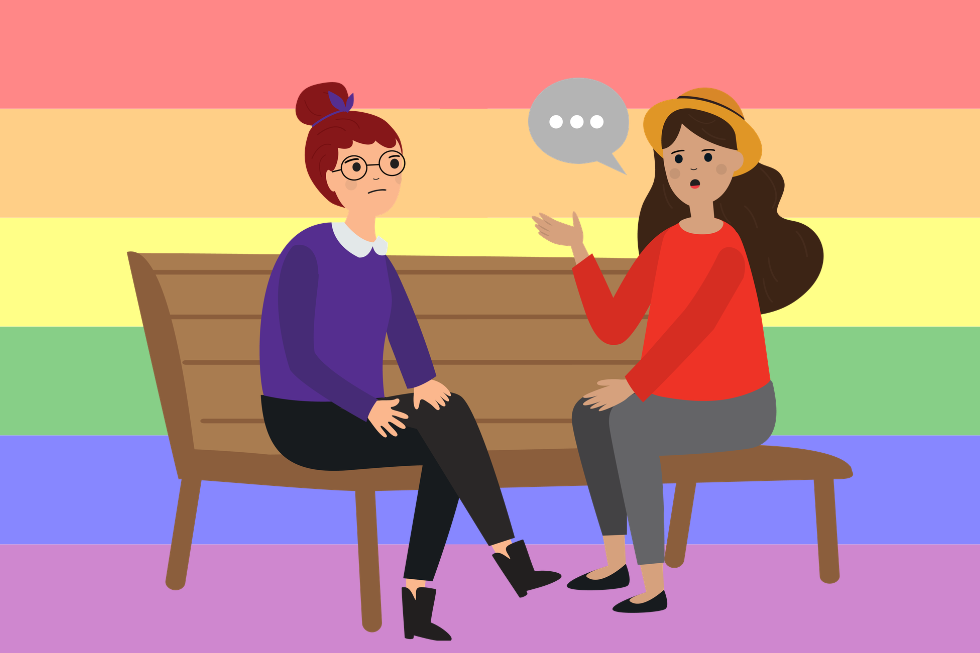
For many LGBTIQA+ people, decisions about who to open up to – about their mental health, their identity, or anything at all – are made long before the conversation starts.
The L in the Mental Health First Aid Action Plan, ALGEE, stands for ‘Listen and communicate non-judgementally’. But that’s not something we turn on when we are concerned about someone. Being non-judgemental, inclusive and kind on a day-to-day basis makes it easier for someone to decide if you are safe to talk to.
From using inclusive language and avoiding assumptions, to respecting pronouns and creating space without pressure, we spoke to MHFAiders who share a common reflection: safer conversations are often built through small moments of curiosity, care and non-judgemental mindsets.
The Considerations when Providing MHFA to an LGBTIQ+ Person guidelines reinforce the importance of creating supportive, inclusive spaces where people feel safe to seek support and be themselves. For many people, that sense of safety can shape whether a conversation about mental health feels possible in the first place.
It can begin in the language someone uses in everyday conversations, the assumptions they avoid, or the way they respond when someone shares something personal.
This Pride Month, we are highlighting the small ways MHFAiders are helping create conversations grounded in respect, belonging and genuine care.
Everyday actions matter
Many MHFAiders reflected that creating safer conversations often starts with signals of respect and inclusion.
For some, that means using inclusive language and avoiding assumptions in everyday conversations.
-
- Relationship-neutral terms: “I often use neutral language, like saying ‘partner’ instead of ‘boyfriend’ or ‘wife’. I also mimic their language and use their words for identity and experiences.”
- Gender-neutral language: “Whenever I meet someone new, I default to ‘they/them’ until I learn their pronouns.”
Several MHFAiders also spoke about visible signs of allyship and safety in everyday interactions.
-
- Wear visible signals: “I wear a badge with a rainbow flag on it, so people can visually see that I am trying to be a ‘safe space’.”
- Normalise pronouns: “I always introduce myself with ‘Hi, my name is [name] and my pronouns are they/them’.”
Using gender- and relationship-neutral language, and avoiding assumptions about someone’s identity, relationships or experiences, can help reduce fear of judgement and create space for open conversations.
Even if you are aware that the person you are supporting is LGBTIQA+, don’t assume that this is a contributor to their current difficulties.
Guidance and autonomy
Many MHFAiders shared the importance of allowing the person to lead the conversation, to share in their own time – and, importantly, only if they want to.
-
- Respect boundaries: “Allow the person to only share what they’re comfortable with, and only when they are comfortable to do so.”
-
- Understand disclosure is a choice: “People may disclose in their own time and place, to those that they choose. It’s okay not to be that person for them.”
-
- Listen actively: “I consciously avoid trying to over identify with their situation. Giving people the space to share what they are experiencing, and listening, is more important than relating to them in the moment.”
-
- Show you’re a safe space: “Reassure them you’re there to listen and support them without judgement.”
No one should feel pressured to disclose aspects of their sexuality, gender identity or personal experiences in order to receive support. Instead, creating conversations grounded in respect and autonomy can help people feel safer to speak openly – if and when they choose.
Action over perfection
Many MHFAiders acknowledged that inclusive conversations – or any mental health first aid conversation – is not about being perfect every time. Instead, they reflected on the importance of openness, accountability and, above all, a willingness to learn and grow.
-
- Show openness to learning: “I always say I am willing to learn more, speak to others and hear their stories. However much someone is willing to share helps with my education.”
-
- Apologise without shifting the focus to you: “If I make a mistake, I apologise quickly and move on, unless they want to talk more about it. It shouldn’t be on them to comfort me over my stumble.”
Sometimes, you may not be the person they want or need to have the conversation with – and that’s okay. It’s better to ask and find out than say nothing. For some MHFAiders, this can simply mean skipping straight to the Es of ALGEE or connecting them to someone else.
-
- Encourage appropriate supports: “If you don’t feel comfortable talking to me, I can help connect you to some support resources. Maybe our EAP or your GP?”
-
- Encourage other supports: “Let them know, ‘if you’d rather talk to someone else, I would be happy to help you find the right person.’”
And above all else, assure the person that if they change their mind, you are available to talk whenever they feel comfortable.
Sometimes, support starts before the hello
At its core, mental health first aid conversations are about helping people feel supported, heard and not alone. This Pride Month, the reflections shared by MHFAiders are a reminder that safer conversations are often built through small moments of respect, inclusion and care.
Sometimes, support can start before we say hello.