
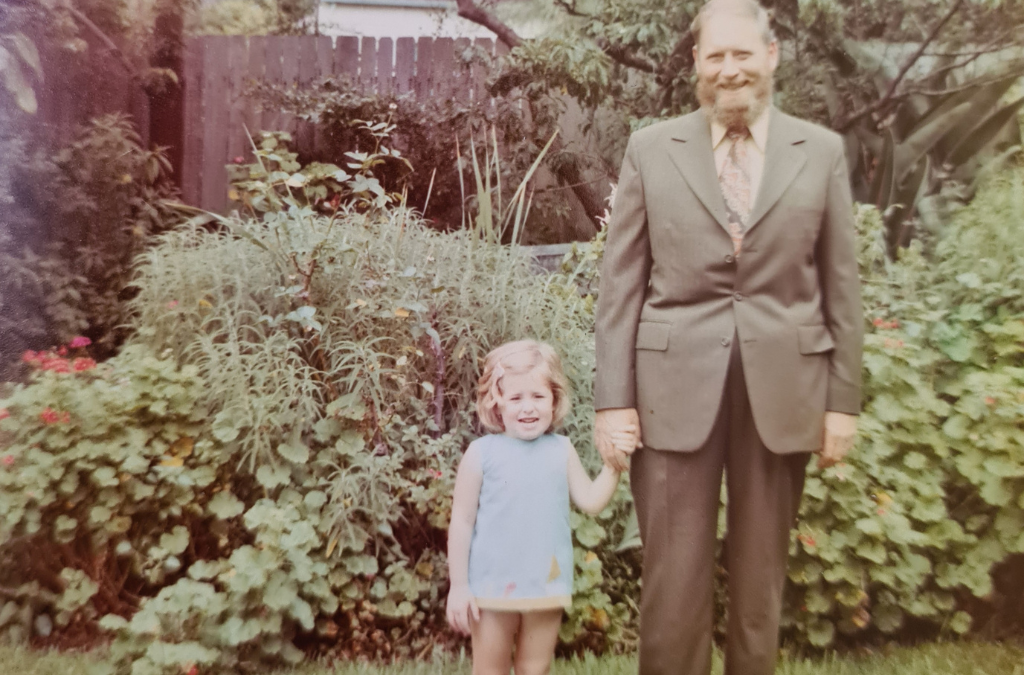
Photo description: Young Tammie standing next to her dad as a child.
Content note: This story discusses suicide.
Growing up as the daughter of a career Navy officer, Tammie Horton saw first-hand how service life can shape not just the individual in uniform, but the entire family around them. Her father joined the Navy in the late 1940s and served for decades, progressing from non-commissioned ranks to a commissioned officer.
“He loved Navy life,” Tammie says. “It gave him structure, purpose and connection.”
But behind that love of service were challenges that were never spoken about. Her father struggled with mental health and substance use, experienced career setbacks later in life, and rarely talked about what he had lived through.
“If my dad were assessed today, he would likely have been diagnosed with depression,” she reflects. “But in his generation, mental health just wasn’t something you talked about.”
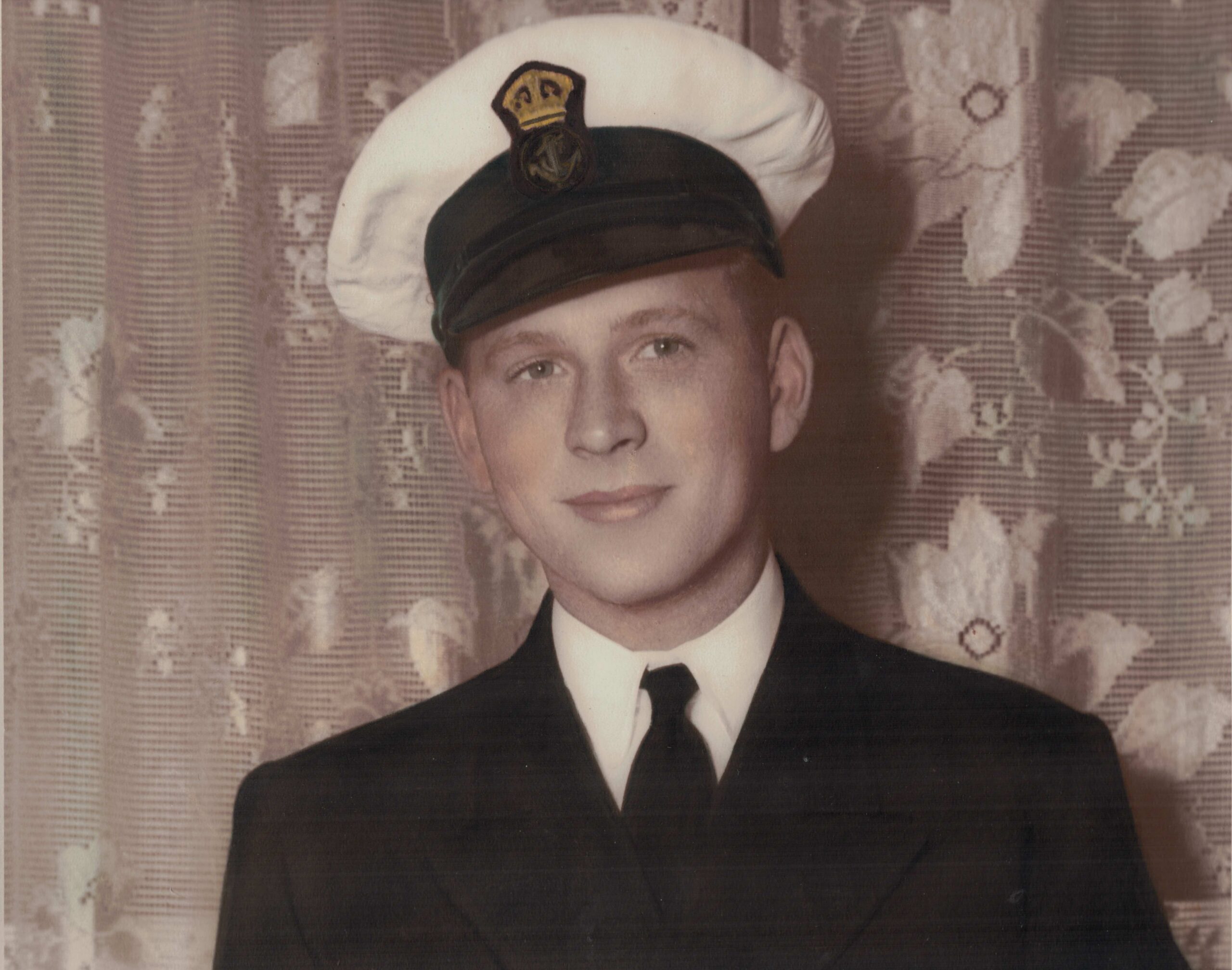
Photo description: Tammie’s dad in his navy uniform.
When service affects the whole family
While her father thrived in Navy culture, the impact on family life was significant. Tammie’s mother, a teacher, has to resign from senior roles with each relocation.
“There was no leave without pay back then,” Tammie explains.
Service life also shaped family moments. Once Christmas in Canberra, her father stayed at the officers’ mess instead of coming home.
“I had more of my dad physically at home than my brother did,” she says. “But emotionally, he wasn’t really there.”
These experiences shaped Tammie’s understanding of the veteran experience – not only for those who serve, but for the families, partners and children alongside them.
A lifelong commitment to suicide prevention
Tammie’s work today is guided by what she calls her “North Star” – suicide prevention. This is something deeply personal to her. She has lived experience of suicidality herself, has supported family members through crises, and has seen the devastating ripple effects when people don’t get support early enough.
“Anything I do in my life is about educating people to notice the signs earlier and provide support sooner,” she says. “Not just to prevent loss of life, but to prevent the grief and trauma that spreads through families and communities afterwards.”
Her connection to the veteran community made Mental Health First Aid for the Veteran Community, a course delivered as part of the free, fully funded Mental Health Protect program, a natural fit.
“I could see how much more we could be doing – especially for families and carers, who so often get forgotten.”
Why veteran life is different
Tammie says one of the biggest misunderstandings about service is the assumption that only combat exposure causes harm.
“There are so many roles in Defence,” she explains. “Even if you never see action, you’re exposed to a very different way of life – highly structured, regimented, with everything taken care of for you.”
That structure can make the transition back to civilian life particularly challenging.
“Suddenly there’s no one telling you what to do. No built-in community. No shared language,” she says. “People miss the camaraderie deeply.”
She saw this in her own family. “My dad transferred the mess to the pub. He was looking for that same connection with people who understood him.”
Why Mental Health Protect matters
Tammie now delivers Mental Health First Aid for the Veteran Community as part of Mental Health Protect, managed by Mental Health First Aid on behalf of the Department of Veteran’s Affairs. She says the program works because it combines the core MHFA training with a specific veteran lens that acknowledges lived experience – not just of service members, but of families and carers too.
“The training is the same evidence-based MHFA program,” she explains, “but when you add that veteran context, it opens up deeper conversations about separation, identity, trauma and transition.”
Participants hear real stories through lived experience films and discussions, helping normalise challenges and reduce stigma. Families, carers and community members gain insight into what might be happening beneath the surface.
“It gives people permission to say, ‘I’m struggling,’ and gives others the confidence to ask, ‘Are you OK?’ – and to really listen.
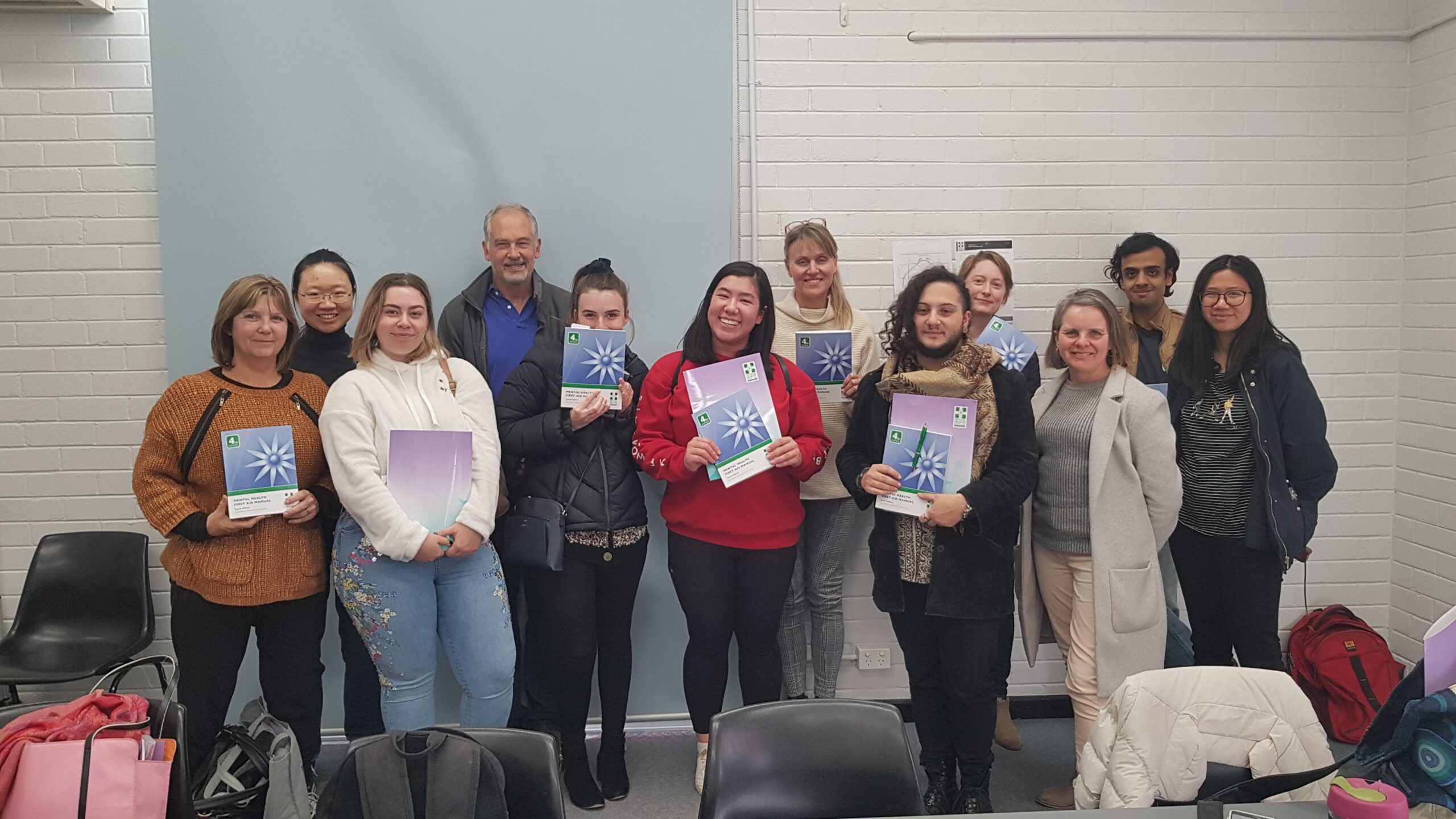
Photo description: Room set up for a Mental Health First Aid course by Tammie.
When the training becomes real
One training session stands out for Tammie as particularly powerful. It was held in a building that used to be her high school – in a room where she had experienced something deeply distressing as a teenager.
“My brain was glitching,” she says. “Being in that space brought everything back.”
Rather than pushing through, Tammie chose honesty. She shared with participants that she was struggling and explained, briefly, why. What happened next embodied the purpose of the training.
“They checked in on me. They used the skills we were learning – with me,” she says. “By the end of the day, they asked how they could make it better. And I told them they already had.”
The experience was profoundly healing. “That space had harmed me once. That day, it helped heal me.”
What she hopes people take away
If there is one thing Tammie wants every participant to leave with, it’s to not be afraid to ask about suicide.
“It’s just a question,” she says. “And asking it opens the door to support much earlier.”
She believes we need to talk more about the lead-up – the stress, the isolation, the feeling that life is becoming too much – not just at crisis point.
“If someone says no, that’s still powerful,” she adds. “It tells them you’re someone they can come to if things change.”
A message for veterans, families and workplaces
Tammie’s message to the veteran community is simple.
“Do the training. Come with an open heart and an open mind,” she says. “Whatever you do to truly listen to another person will help them.”
She believes mental health first aid skills are used far more often than physical first aid.
“If you interact with other human beings, you’ll use these skills every day,” she says. “Get the skills – and then have the conversation.”
If you or someone you know needs support, Mental Health First Aid encourages you to reach out to Lifeline | 13 11 14, 13Yarn | 13 92 76 or Suicide Callback Service | 1300 659 467. Find further supports.
Be the first line of support
Mental Health Protect™ is a fully funded training program that builds mental health and suicide prevention skills within the veteran community – at no cost to participants.
Funded by the Department of Veterans’ Affairs and delivered by Mental Health First Aid Australia and LivingWorks, the program equips individuals to recognise signs of mental health problems and distress and provide support when it’s needed most.
By completing free Mental Health First Aid or LivingWorks training, you’ll gain practical skills that may change or save a life.